How a cardboard wall sculpture is made
Every OLSHBAU relief starts grey: a sheet of board, a knife and a cutting mat. Colour comes last. This is the whole route in seven steps, from the first drawing to the work on the wall.
- Material
- Bookbinding board 2–4 mm, plywood 5–8 mm, paper pulp
- Tools
- Ballpoint, knife, mat, brush
- Colour
- Matte acrylic, by hand
- Made in
- Gdańsk, one at a time
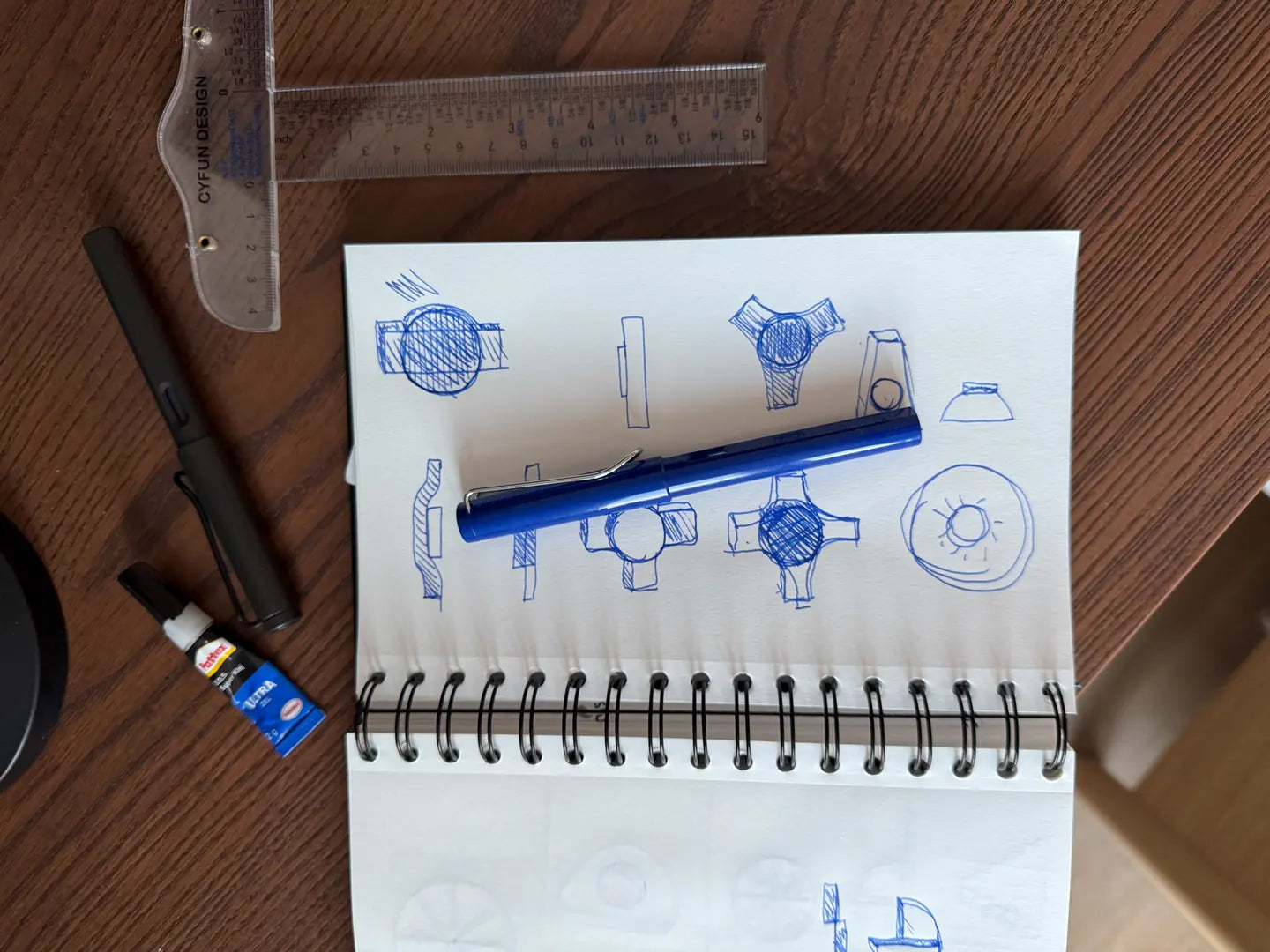
Draw
The work begins in a sketchbook, in ballpoint. We draw the object from several sides, the way an engineer draws a part: the front, the section, the joint that holds it together.
A relief has depth. It has to work as an object before it can work as a picture.
Cut
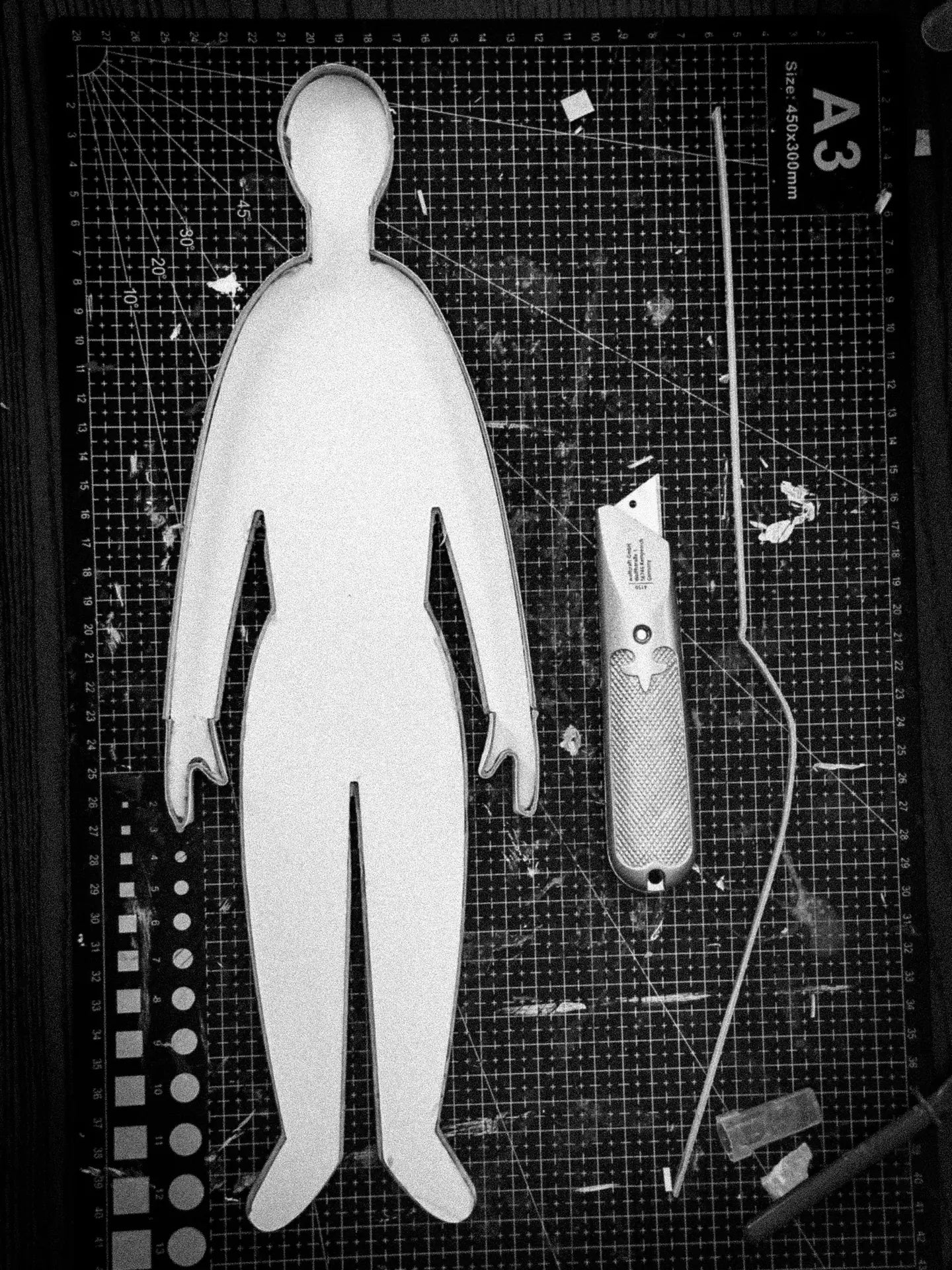
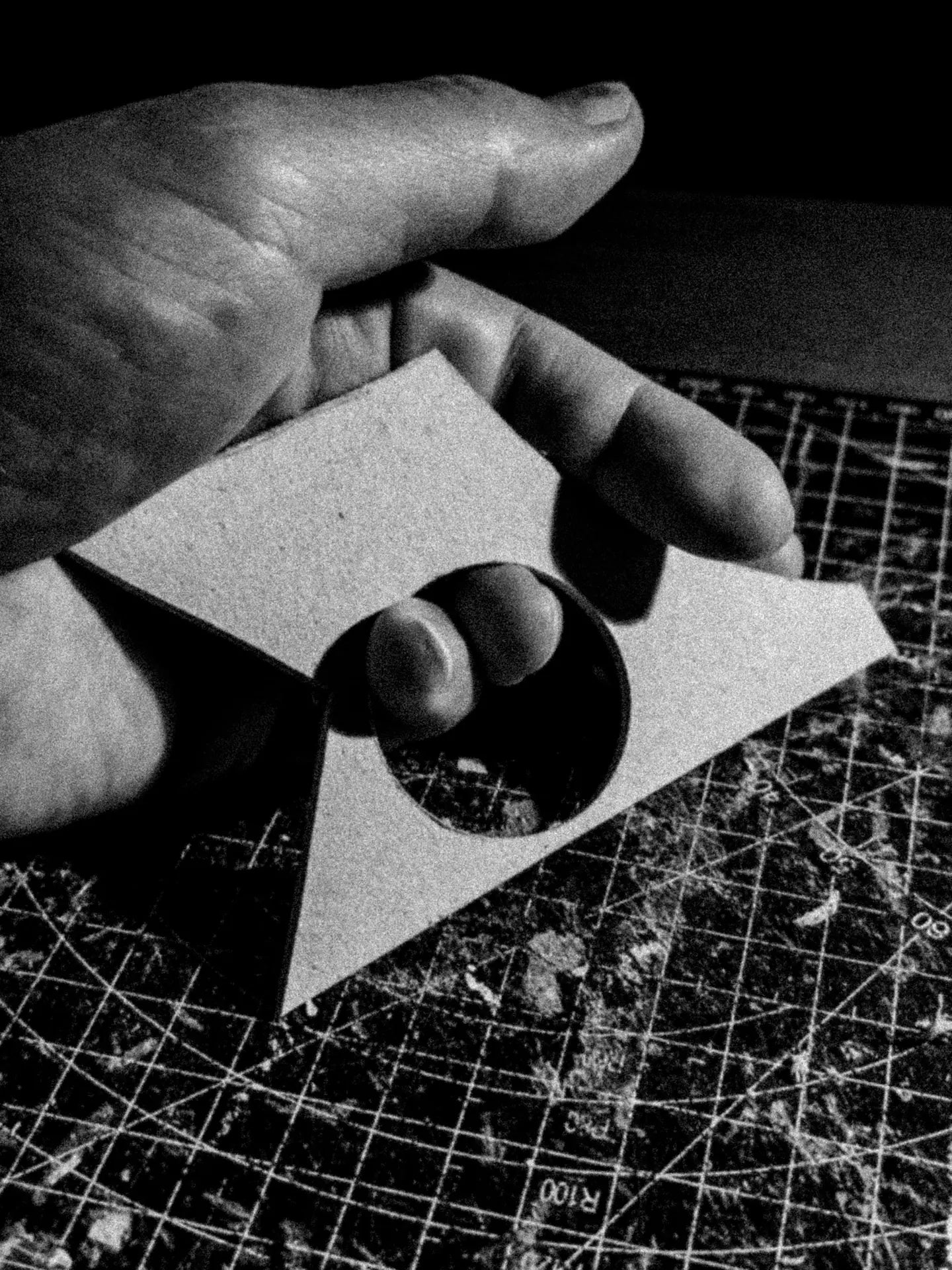
The drawing is transferred to bookbinding board, 2 to 4 mm thick, and cut by hand with a utility knife on a cutting mat. There is no laser and no die.
A knife leaves a slightly soft edge, and that edge stays visible in the finished work. It is one of the ways you can tell a hand-cut relief from a machined one.
Build
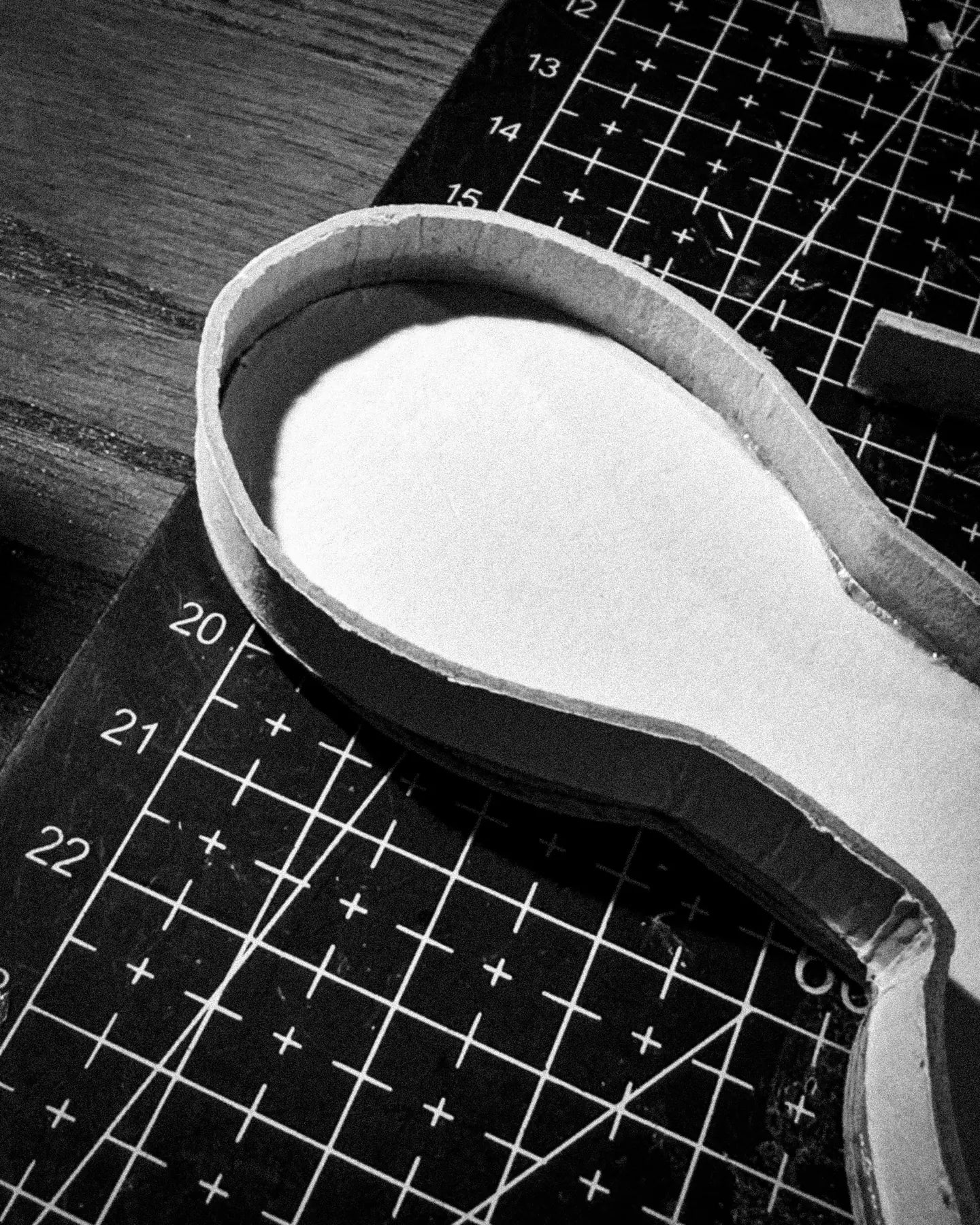
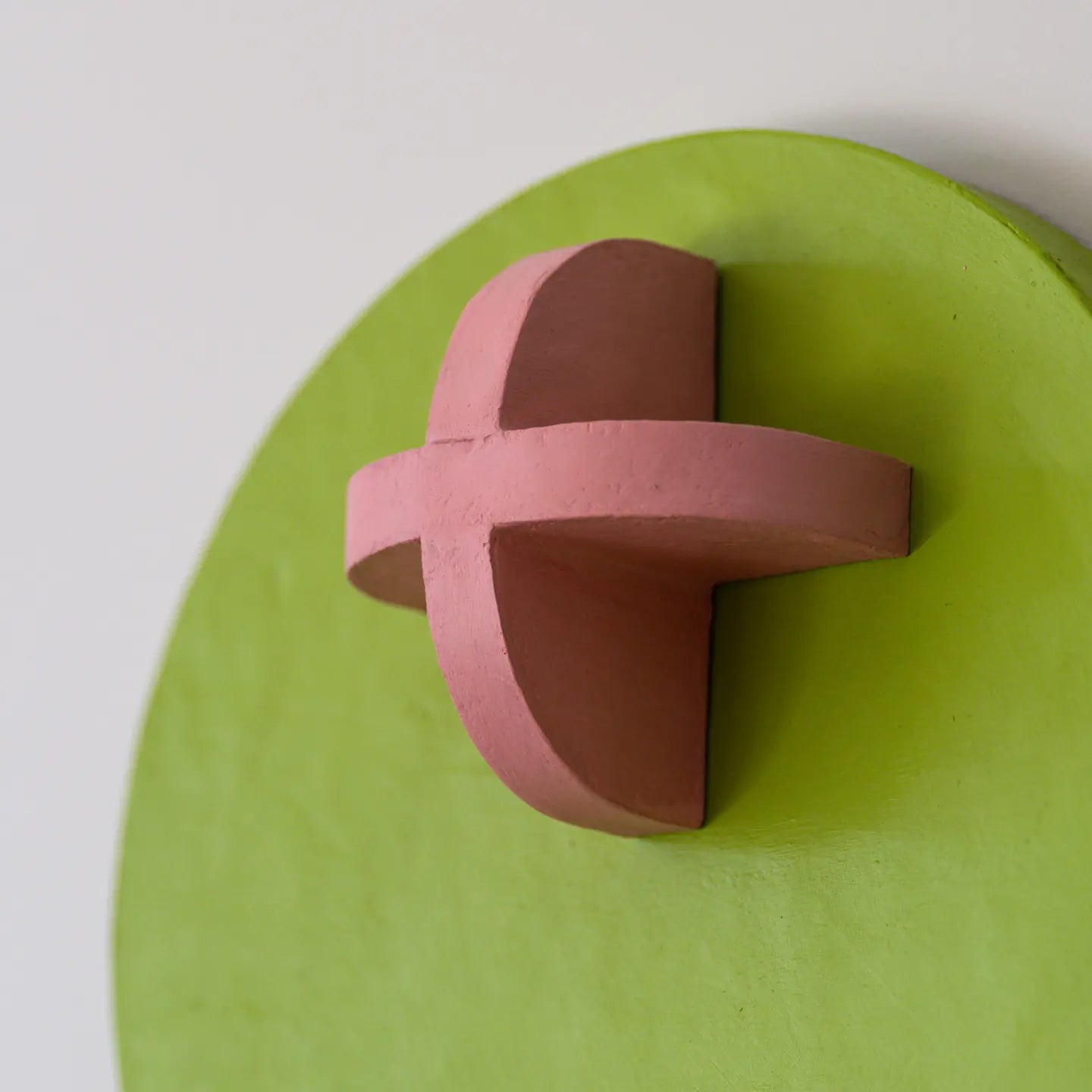
The base is plywood, 5 to 8 mm thick. On it, a flat shape becomes a relief when it gets a wall: strips of board are bent around the outline and glued on edge, like the side of a box.
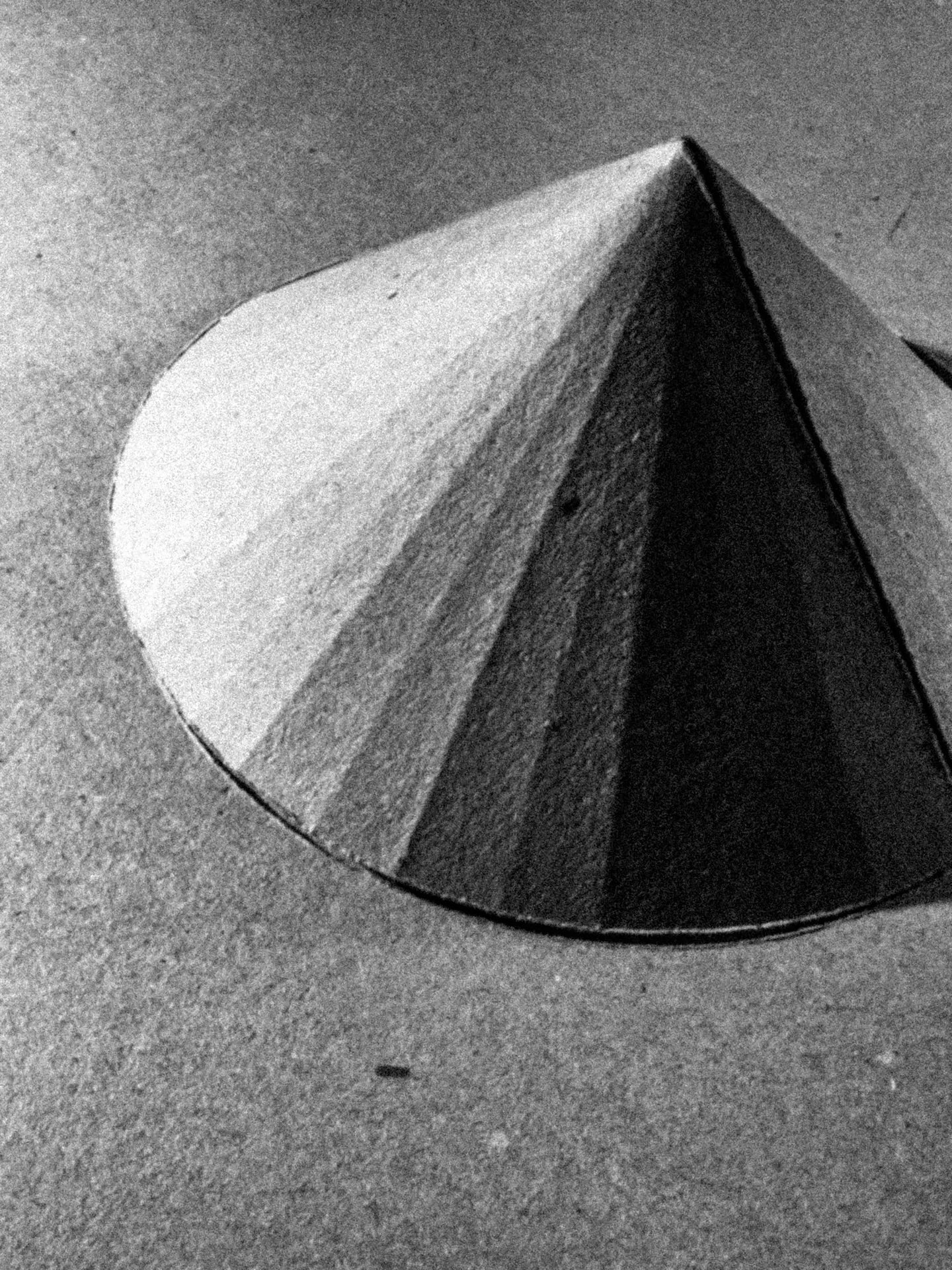
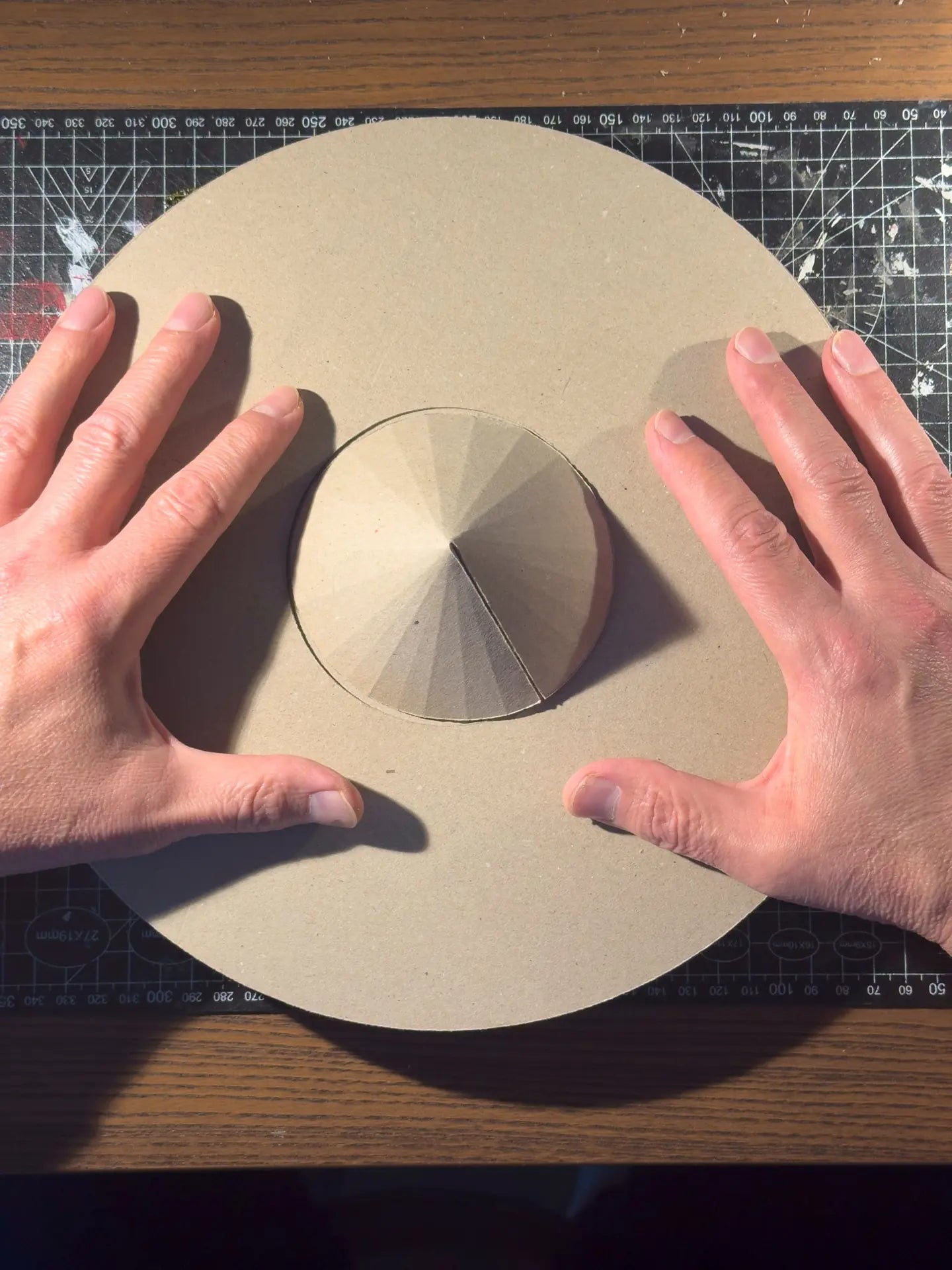
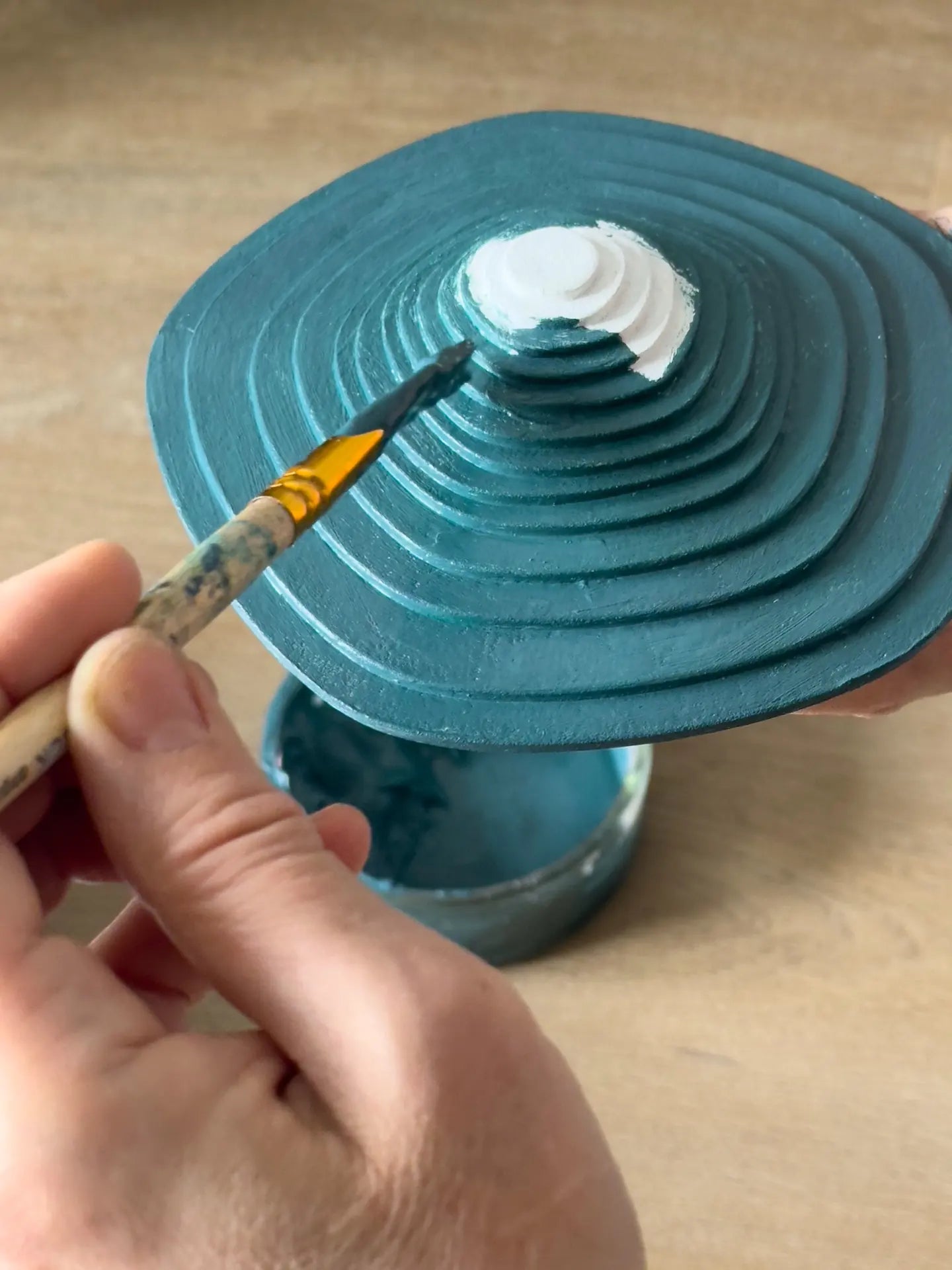
Curves are made the way a paper cone is made: the board is scored into narrow segments and pulled round until it closes. A cone like this one sits at the centre of Soft Propaganda.
Coat
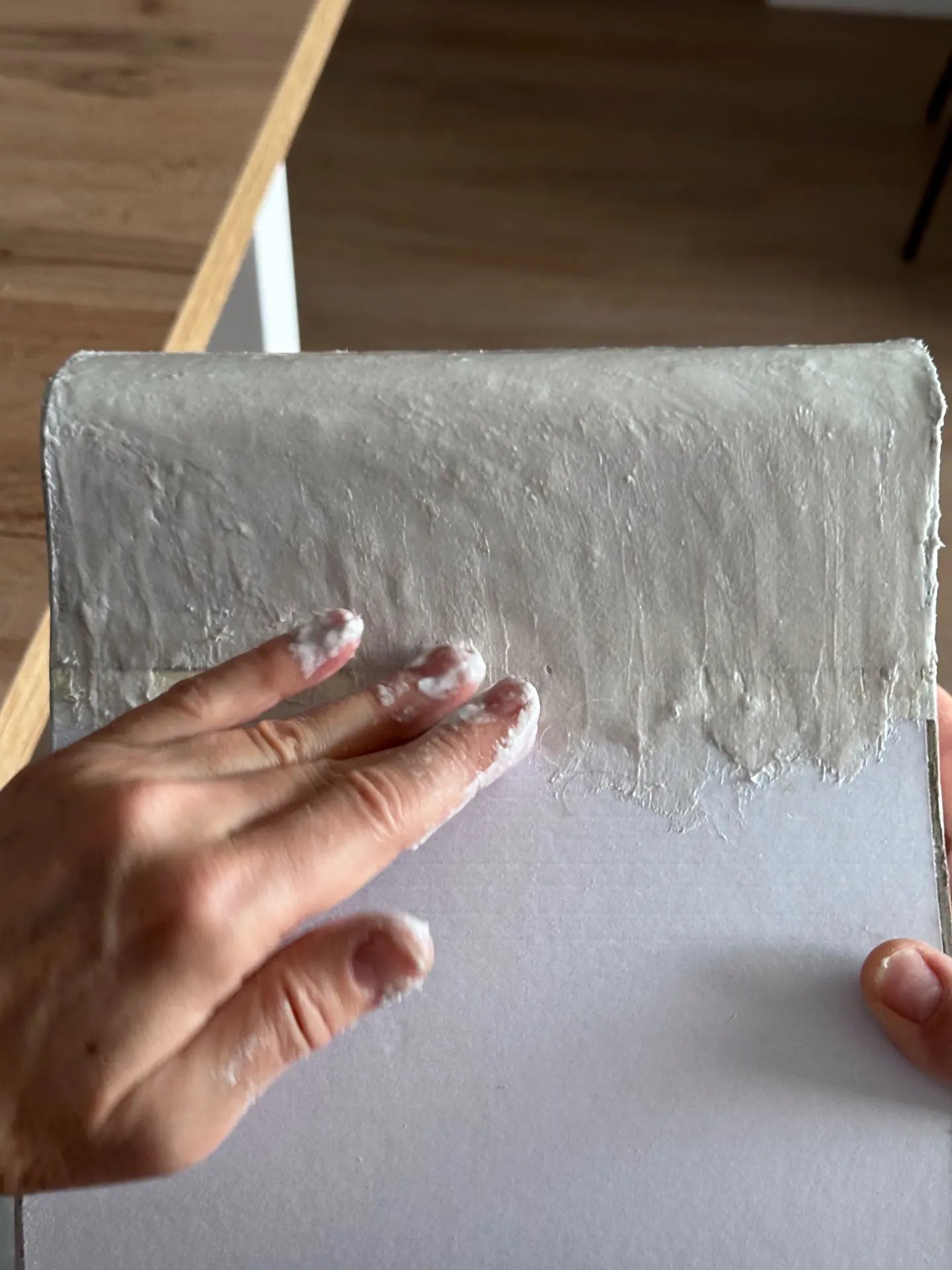
Bare board soaks up paint and shows every seam, and a hollow board form needs stiffening. So it is covered by hand with a papier-mâché pulp we mix ourselves from recycled paper, PVA glue, flour and vegetable oil. It is pressed on with the fingers and keeps their texture. Some works use plaster as well.
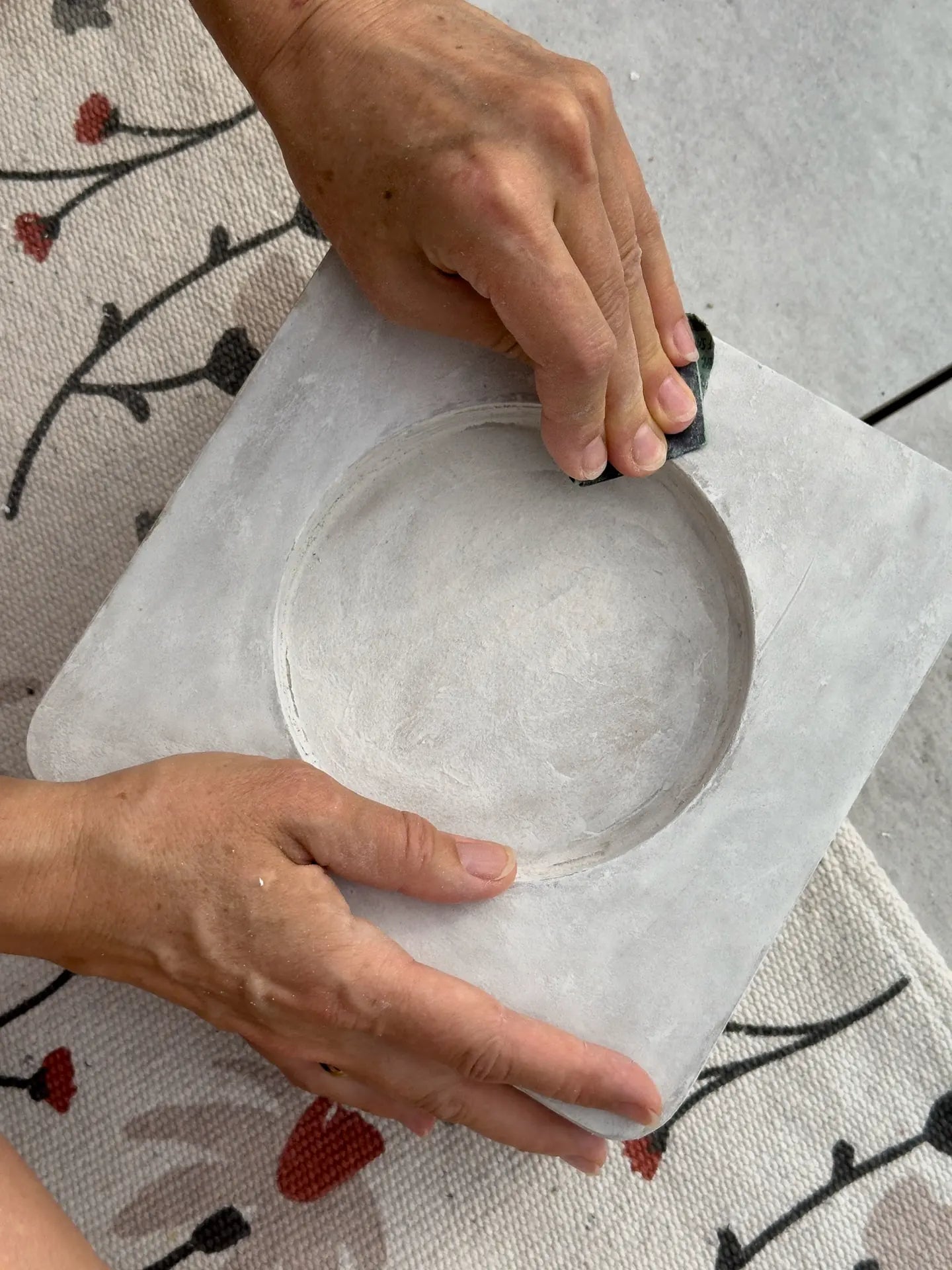
Once dry, the surface is sanded where the design needs a clean plane and left rough where it does not.
Mix
Colour is tested on strips of board, not on white paper: the surface changes the colour. We mix acrylics until a strip sits right next to the others.

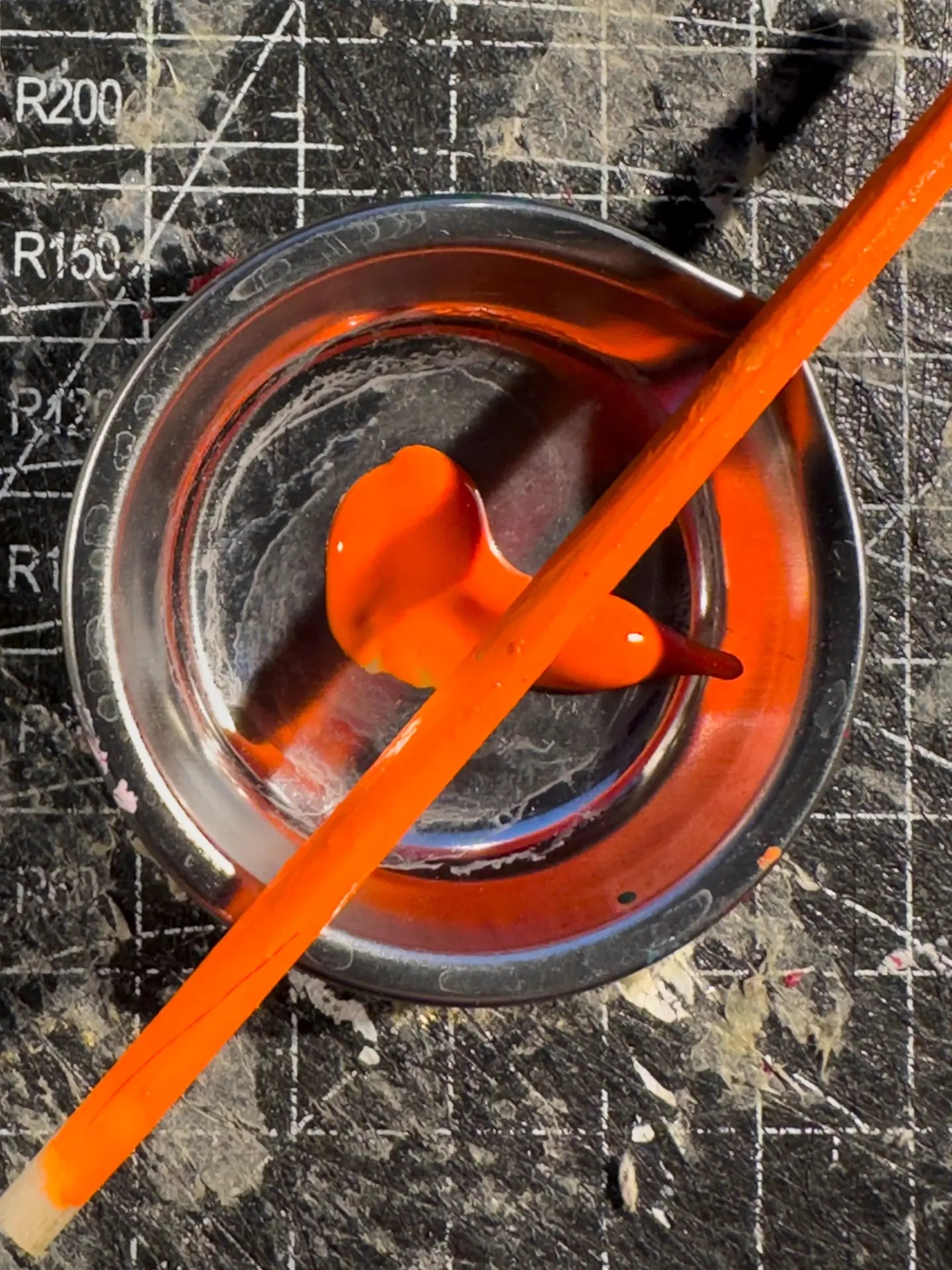
Paint
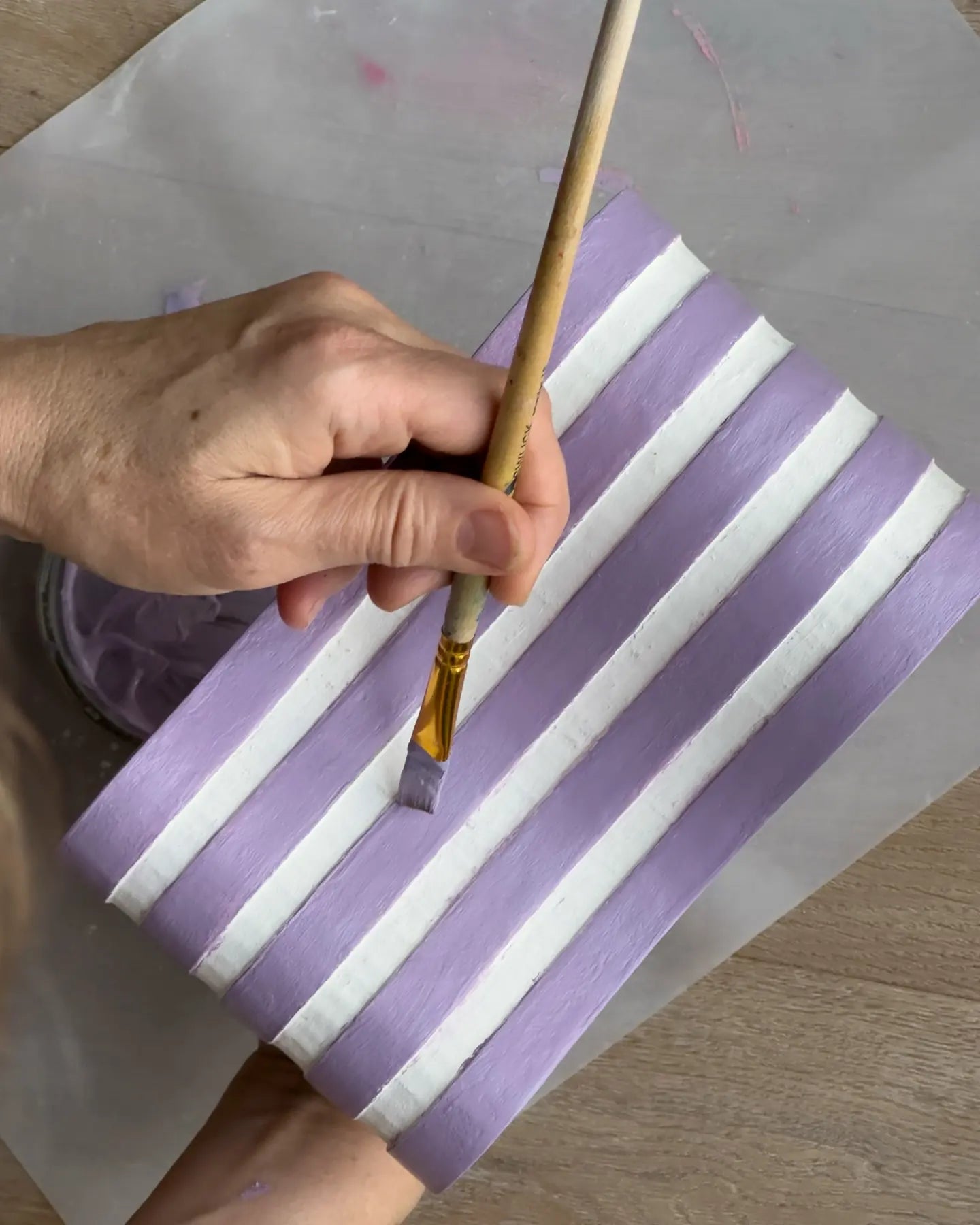
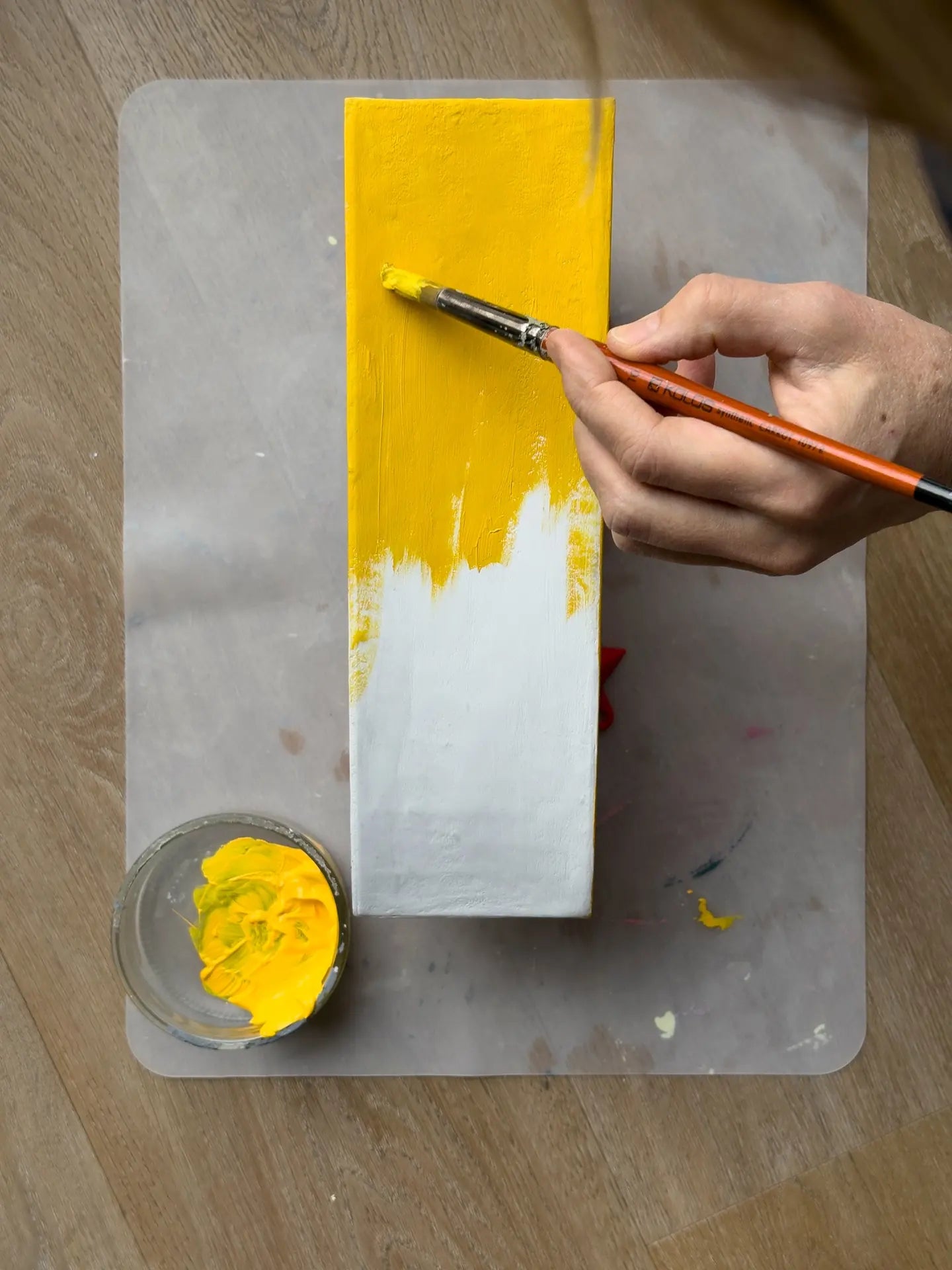
Paint goes on with a brush, in matte acrylic. The brush follows the form: ridges, steps and edges show where one colour stops and the next begins.
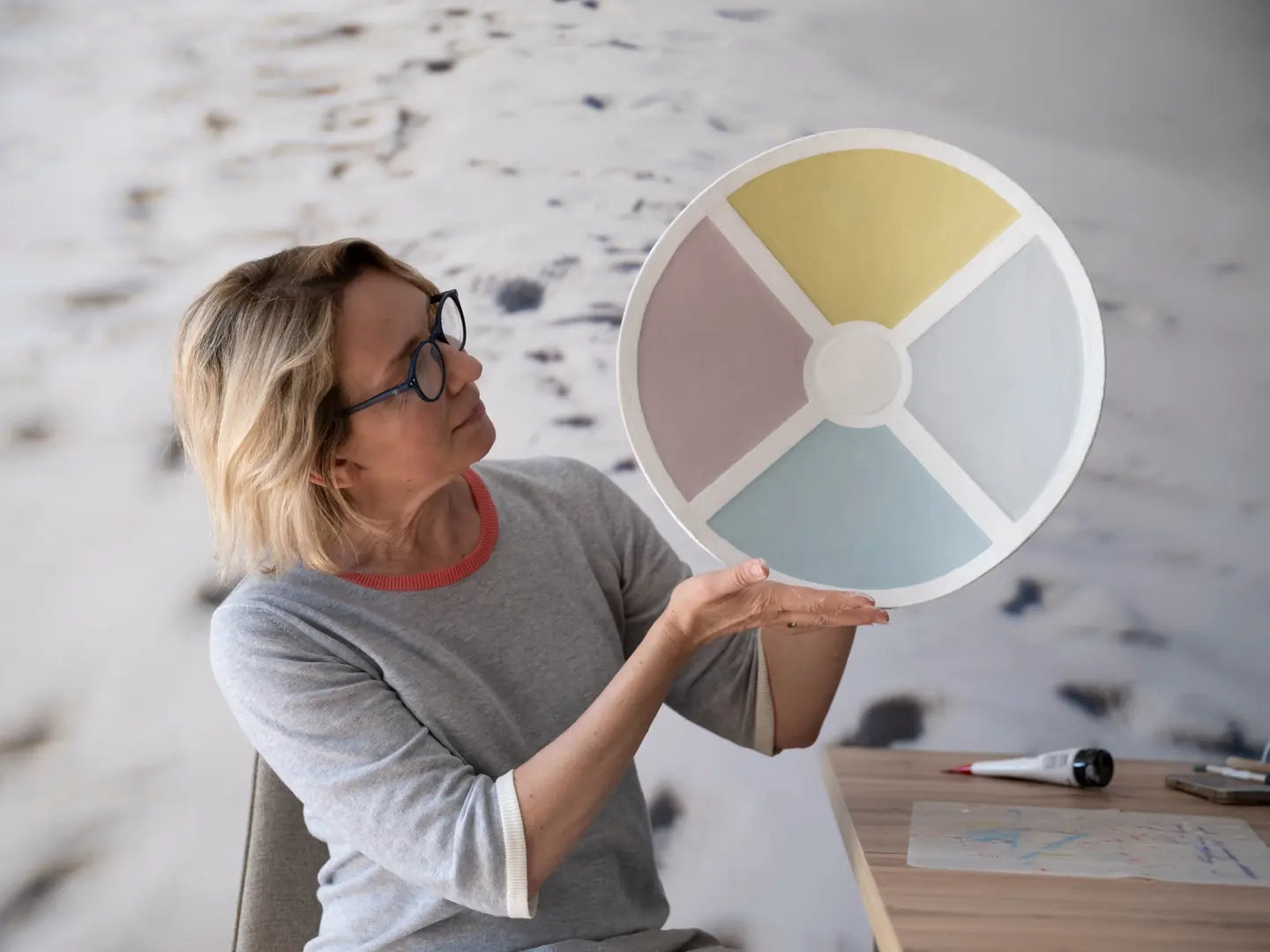
You can see Purple Wave here halfway through. Some works get a final satin coat that seals the surface.
Hang
The finished work is signed and numbered on the back and gets a certificate with the same number.
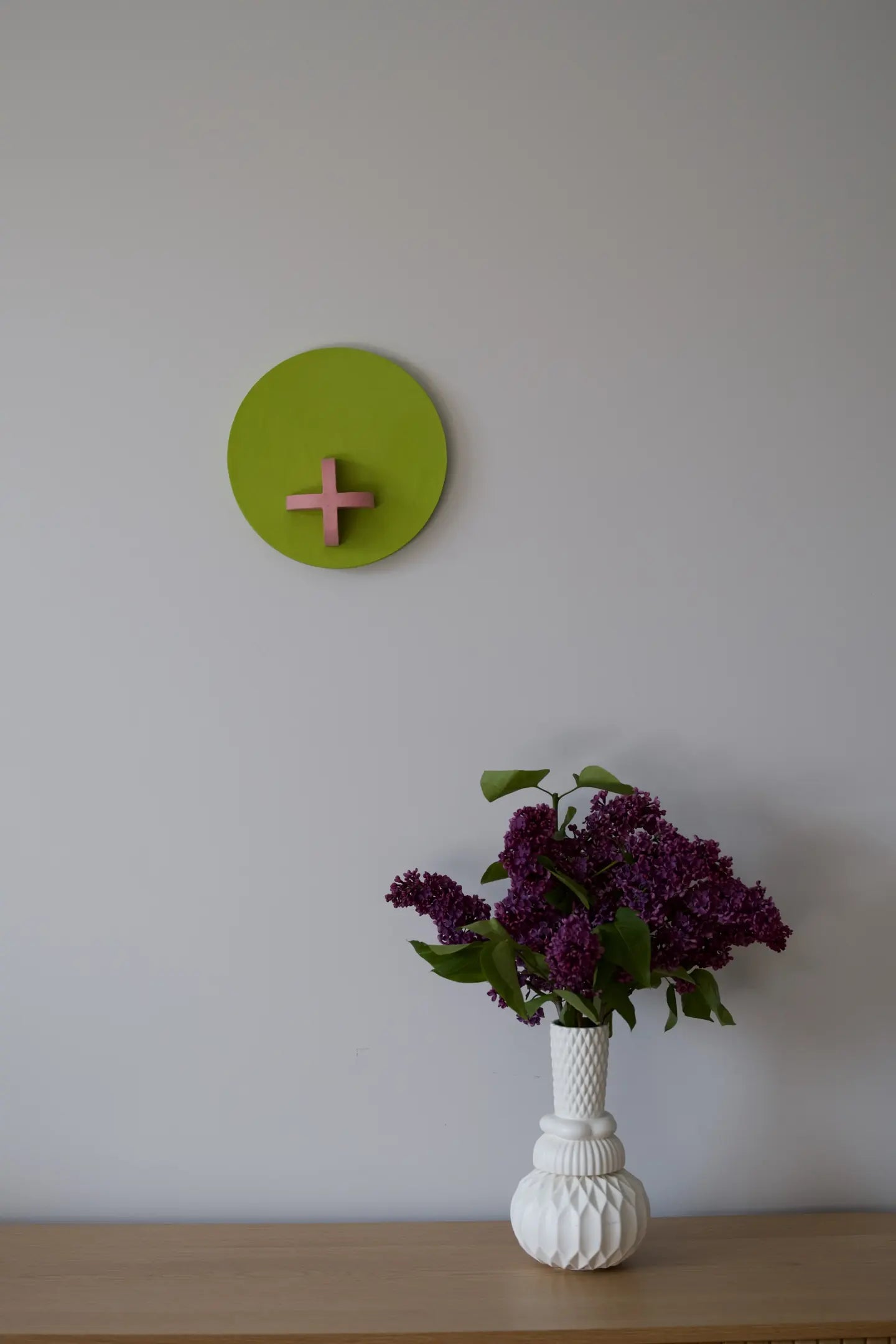
Then it goes on the wall, where the depth starts to work: the relief throws its own shadow, and the shadow moves through the day. Rotatable Suprematist is made to be turned, so you can hang it at any angle and change it when you want the wall to change.
Why cardboard
Cardboard has been a sculptor’s material for more than a century. In 1912 Picasso built his first Guitar from cardboard, paper and string; it is in the collection of the Museum of Modern Art in New York. Frank Gehry’s Easy Edges furniture of 1969–73 is corrugated cardboard, and the Wiggle Side Chair from that series is still in production at Vitra.
Board is quick: a form can be cut, tried and cut again without a foundry or a kiln. And it is plain about what it is. Nobody mistakes it for bronze, so what you look at is the drawing and the handwork.
Living with one
- Is a cardboard sculpture durable?
- Indoors, yes. The board is stiffened with a coat of paper pulp and sealed under paint, so what you touch is a painted surface, not raw cardboard. Treat it like a work on paper: a dry room, out of direct sunlight, not above a radiator and not in a bathroom.
- How do I clean it?
- Dust it with a soft, dry brush. No water and no cleaning sprays.
- Is each piece unique?
- Most works are unique: one piece, never repeated. A few are made in small editions, and the edition size is stated on the page of the work. Every piece is signed and numbered on the back and ships with a signed certificate of authenticity.
- Can you make one for a particular wall?
- Yes. We take commissions for a given size or colour. Write to info@olshbau.art with the size, a photo of the wall and a rough budget.


